
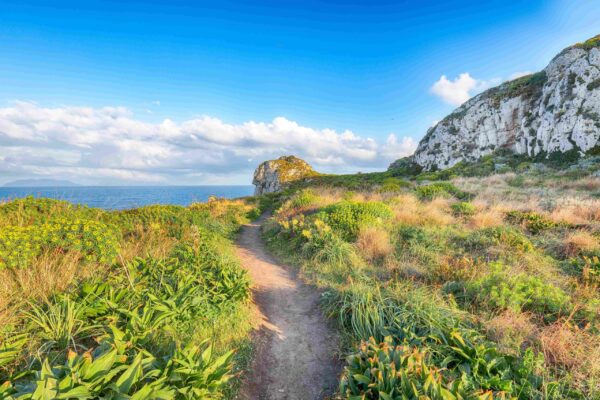
Folkestone coastal trails in Kent are a network of walking paths located along the cliffs, seafront, and green coastal zones of Folkestone on the English Channel. These trails connect upper clifftop areas such as The Leas with the lower promenade and shoreline sections. The trail system reflects the natural coastal geography and planned pedestrian routes shaped by the town’s cliff and sea landscape.
Geographic Layout of Folkestone Coastal Trails
The coastal trails are distributed along the southern edge of Folkestone, following both the cliff line and the lower coastal levels. Some routes run near the top of the cliffs with wide sea views, while others descend toward the promenade and beach zones. This layered structure allows movement between different elevations of the coastal environment.
The trails are closely integrated with the natural terrain and do not form a single straight path. Instead, they include curved routes, sloped paths, and connecting walkways that adapt to the cliff formation. The English Channel forms the constant southern boundary, while urban and green spaces lie to the north of the trail network.
Key geographic features of the trail system:
- Paths along cliff edges and coastal slopes
- Connections to the seafront promenade
- Views across the English Channel
- Integration with green and landscaped areas
Natural Environment and Landscape Features
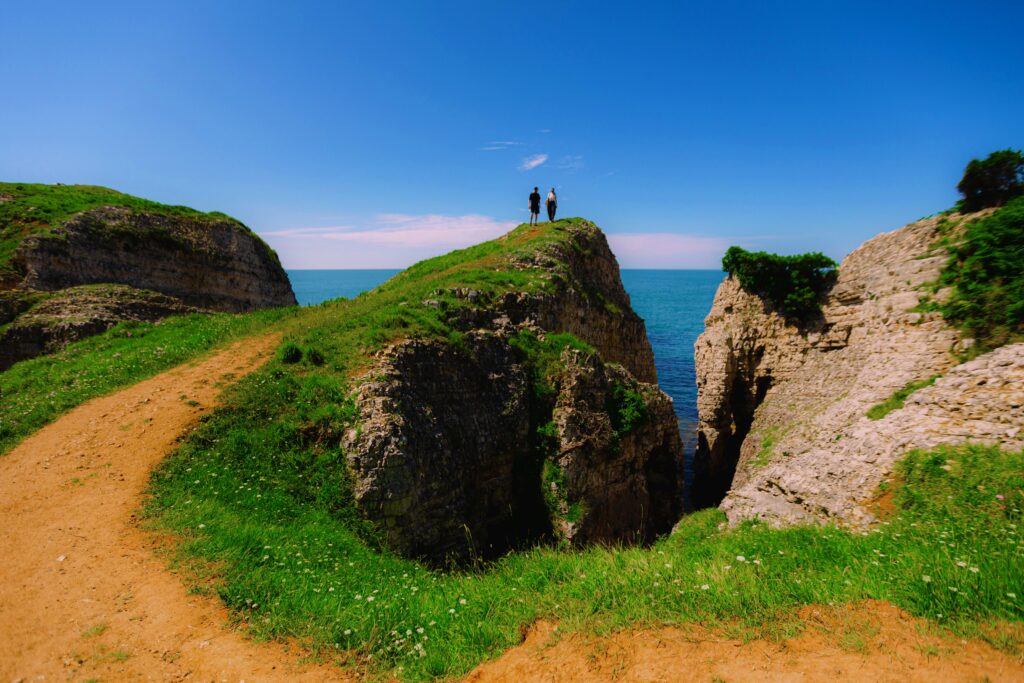
The land around Folkestone coastal trails has grassy cliff tops, coastal plants, and open places to look at the sea. Wind and salt air make plants grow differently, and change the path surface. In some parts, plants are small or few because sea weather is strong.
The trails have places to watch the coast, horizon, and ships passing by easily. Cliffs’ rocks are visible also, showing layers of stone like usual on the Kent coast. Weather can change view and feeling, especially in fog or strong wind from the sea.
Notable environmental characteristics:
- Open cliffside viewing areas
- Coastal grass and low vegetation
- Sloping terrain toward the sea
- Natural erosion features along edges
Trail Connectivity and Public Use
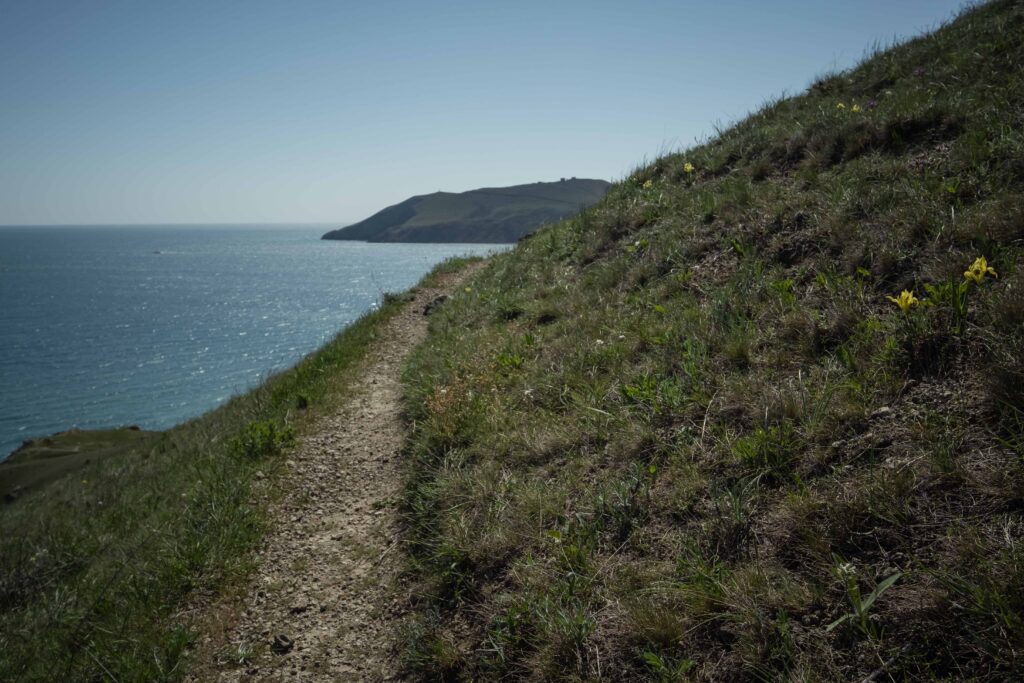
Folkestone coastal trails are mostly for walking and not for transport. They let people go slowly between big coastal places, like The Leas, the promenade, and other seafront ways and nice green areas. Trail design helps people walk with small hills and places to rest on the way, sometimes with a view of the sea.
People can enter trails from streets, parks, and coast paths. This makes trails very important for town plans and town life. Some paths are big and formal; other paths are small and follow cliff shapes and natural curves.
Take care of trails that need fixed surfaces, cut plants and watch cliffs for safety because erosion is strong. Trails are on the coast, so weather, wind, and ground need to be checked often. Folkestone coastal trails in Kent show a mix of plan and nature and how cliff, town, and English Channel coast are always together.